


Nacionalni park Kornati
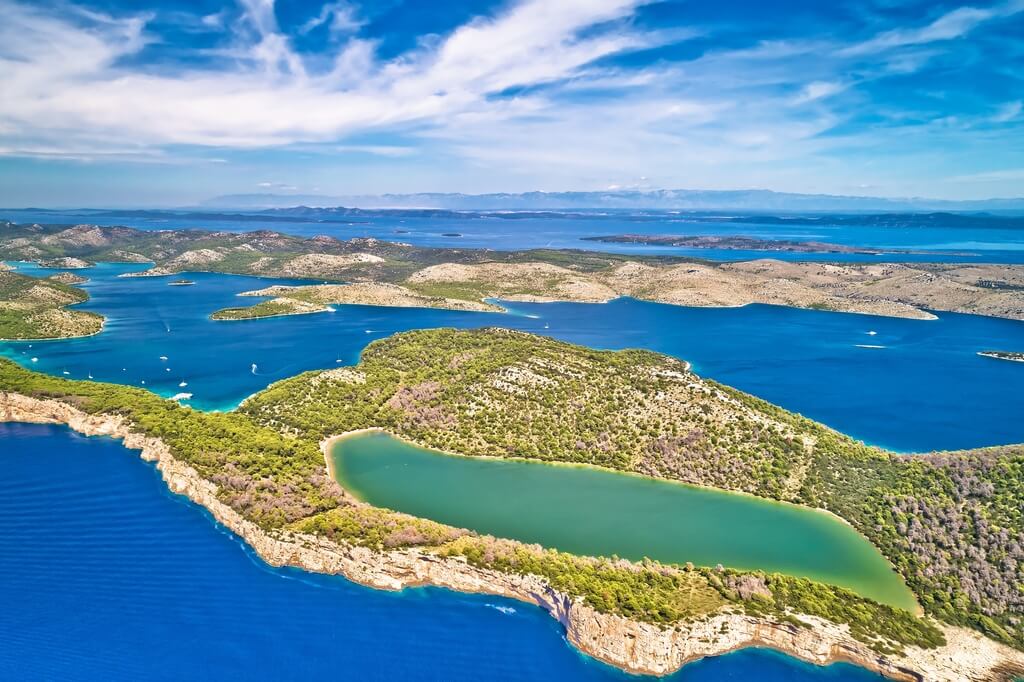
Nacionalni park Kornati pokriva veći dio Kornatskog akvatorija. Zbog iznimne pejzažne ljepote, zanimljive geomorfologije, izrazito razvedene obale, kao i zbog bogatih zajednica podmorskog ekosustava, otoci su 1980. godine proglašeni nacionalnim parkom.

Kornati – Geografski podaci
Kornatski arhipelag, kao zasebna i posebna otočna skupina smještena između šibenskih i zadarskih otoka, prostire se na površini od oko 320 km2 i obuhvaća oko 150 kopnenih jedinica, stalno ili često smještenih iznad mora. Arhipelag čini 12% svih otoka hrvatskog Jadrana – 1264 otoka, od kojih je 67 naseljeno. Već odavno privlači pozornost nautičara, ronilaca, planinara i ostalih ljubitelja prirode. Od Balabra do Samograda, udaljenost 35 km ili 19 nautičkih milja (između Dugog otoka i Žirja), te od Mane do Gangarola, udaljenost 13 km ili 7 nautičkih milja (između otvorenog mora i Pašmana, Vrgade i Murtera) su četiri otočna lanca u dvije skupine. Jedan od njih su Gornji Kornati – otok Sit i otok Žut, koji čine niz od 51 kopnene jedinice, a drugi su Donji Kornati s 98 kopnenih jedinica.
Najsjeverniji otok arhipelaga je otočić Mala Balabra (43° 56′ 50” N, 15° 17′ 00” E), najjužniji je Južnji Opuh (43° 40′ 29” N, 15° 30′ 08” E), najzapadniji je Vela Alba (43° 52′ 14” N, 15° 12′ 42” E), dok je najistočniji otok Samograd (43° 41′ 15” N, 15° 33′ 42” E).
Prosječna površina kornatskog otoka je samo 0,55 km2, ali treba uzeti u obzir da Kornat (32,5 km2) i Žut (14,8 km2) zauzimaju oko 70% kopna. Dodamo li Piškeru, Levrnaku, Lavsu i Situ, dobivamo 88% ukupne kopnene površine Kornatskog arhipelaga (69.452.963 m2). Samo devet otoka je veće od jednog četvornog kilometra, a njih 76 je manje od jednog hektara. Prema nekim mjerenjima, obala otoka Kornata duga je 66 km, dok Donji Kornati (odnosno Nacionalni park Kornati) imaju obalu dugu 238 km.
Kornati – popis otoka
|
Ime otoka (Prema Izletnoj karti NP “Kornati”) |
Ime otoka – pomorska karta | Zemljopisna širina | Zemljopisna dužina | Površina (m2) | |
| 1. | Aba V. | – | 43°52,00’N | 15°13,00’E | 383.042 |
| 2. | Arapovac | – | 43°47,75’N | 15°18,30’E | 9.918 |
| 3. | Babina Guzica | – | 43°42,65’N | 15°30,10’E | 11.176 |
| 4. | Balun | – | 43°48,40’N | 15°15,50’E | 49.553 |
| 5. | Bisaga | – | 43°48,55’N | 15°17,20’E | 92.237 |
| 6. | Bisaga | – | 43°44,75’N | 15°25,60’E | 6.084 |
| 7. | Blitvica | – | 43°46,35’N | 15°21,65’E | 5.329 |
| 8. | Borovnik | – | 43°48,70’N | 15°15,50’E | 273.219 |
| 9. | Crnikovac | Šilo | 43°50,75’N | 15°14,45’E | 20.691 |
| 10. | Desetinjak | – | 43°42,40’N | 15°28,00’E | 2.324 |
| 11. | Desetinjak D. | – | 43°42,55’N | 15°27,80’E | 1.260 |
| 12. | Desetinjak G. | – | 43°42,65’N | 15°28,00’E | 1.210 |
| 13. | Dragunarica M. | – | 43°51,70’N | 15°13,40’E | 50 |
| 14. | Dragunarica V. | – | 43°51,70’N | 15°13,55’E | 17.344 |
| 15. | Garmenjak | Garmenjak V. | 43°42,15’N | 15°27,90’E | 131.858 |
| 16. | Golić | – | 43°48,80’N | 15°16,80’E | 10.275 |
| 17. | Gominjak | – | 43°43,30’N | 15°24,90’E | 253.298 |
| 18. | Grego | Garmenjak M. | 43°42,50’N | 15°28,10’E | 50.204 |
| 19 | Gustac | – | 43°46,60’N | 15°21,25’E | 284.502 |
| 20. | Gustac | – | 43°44,85’N | 15°23,30’E | 284.450 |
| 21. | Janjčar | Jančar | 43°43,20’N | 15°26,15’E | 59.309 |
| 22. | Kalafatin | Hrid Prišnjak | 43°50,20’N | 15°14,45’E | 77 |
| 23. | Kalafatin (Hrid Kamičić) | Hrid Kamičić | 43°47,60’N | 15°17,20’E | 844 |
| 24. | Kalafatin D. | Hrid Kamičić | 43°47,55’N | 15°17,20’E | 72 |
| 25. | Kalafatin od Gustaca (Hrid Gizela) | Hrid Grislac | 43°46,50’N | 15°21,55’E | 26 |
| 26. | Kalafatin od Piškere | Hrid Kamičić | 43°46,15’N | 15°21,40’E | 41 |
| 27. | Kalafatin od Ropotnice | Hrid Kalafatin | 43°46,65’N | 15°21,90’E | 4 |
| 28. | Kasela | – |
43°44,50’N
|
15°23,70’E | 342.384 |
| 29. | Kaselica | – | 43°44,25’N | 15°23,95’E | 2.469 |
| 30. | Kolobučar | Klobučar |
43°44,40’N
|
15°23,25’E | 110.003 |
| 31. | Koritnjak | – | 43°46,95’N | 15°20,55’E | 116.600 |
| 32. | Kornat | – | 43°48,10’N | 15°20,00’E | 32.463.820 |
| 33. | Kurba | Kurba Vela | 43°41,80’N | 15°29,85’E | 1.736.793 |
| 34. | Lavsa | – | 43°45,10’N | 15°22,50’E | 1.756.113 |
| 35. | Levrnaka | – | 43°49,30’N | 15°15,30’E | 1.833.883 |
| 36. | Lučmarinjak | – | 43°41,00’N | 15°29,30’E | 100.503 |
| 37. | Lunga | – | 43°43,75’N | 15°25,40’E | 617.814 |
| 38. | Mana | – | 43°48,10’N | 15°16,50’E | 395.627 |
| 39. | Maslinjak | – | 43°48,00’N | 15°18,00’E | 65.363 |
| 40 | Mrtenjak | Mrtovnjak |
43°42,50’N
|
15°32,40’E | 97.928 |
| 41. | Mrtvac | Mrtovac |
43°49,55’N
|
15°14,10’E | 48.875 |
| 42. | Obručan M. | – | 43°50,15’N | 15°13,50’E | 4.618 |
| 43. | Obručan V. | – | 43°50,10’N | 15°13,90’E | 96.552 |
| 44. | Okjuč | – | 43°41,70’N | 15°28,65’E | 358.291 |
| 45. | Opuh Južni | Puh G. | 43°40,50’N | 15°30,20’E | 7.175 |
| 46. | Opuh Kameni | Kameni Puh | 43°40,60’N | 15°31,35’E | 9.290 |
| 47. | Opuh Vodeni | Vodeni Puh | 43°40,70’N | 15°30,95’E | 6.766 |
| 48. | Opuh Zmorašnji | Puh |
43°40,60’N
|
15°29,95’E
|
13.625 |
| 49. | Oršjak (Krpejina) | Krpeljina | 43°45,30’N | 15°24,65’E | 13.449 |
| 50. | Panitula M. | – | 43°45,30’N | 15°21,50’E | 30.699 |
| 51. | Panitula V. | – | 43°45,50’N | 15°20,90’E | 147.762 |
| 52. | Piškera (Jadra) | Piškera |
43°46,05’N
|
15°20,60’E | 2.668.046 |
| 53. | Plescina | – |
43°48,50’N
|
15°16,50’E | 39.846 |
| 54. | Prduša | Prduša V. | 43°42,85’N | 15°27,40’E | 48.779 |
| 55. | Prišnjak V. (Crnikovac) | Prišnjak V. |
43°44,30’N
|
15°24,45’E | 91.812 |
| 56. | Prišnjak M. | – | 43°44,20’N | 15°24,65’E | 6.464 |
| 57. | Purara M. | Hrid Klint | 43°41,60’N |
15°26,90’E
|
2.288 |
| 58. | Purara V. | Purara |
43°41,85’N
|
15°26,50’E | 24.423 |
| 59. | Rašip | Rašip V. | 43°46,70’N | 15°18,60’E | 246.069 |
| 60. | Rašip M. | – | 43°47,35’N | 15°17,75’E | 154.559 |
| 61. | Rašipić | – | 43°47,05’N | 15°18,20’E | 10.872 |
| 62. | Samograd | – |
43°41,30’N
|
15°33,65’E | 44.894 |
| 63. | Sika Ravna | – | 43°44,80’N | 15°25,80’E | 40.210 |
| 64. | Sikica D. | Bubuljaš V. | 43°47,95’N | 15°17,30’E | 5.710 |
| 65. | Sikica G. | Bubuljaš M. | 43°48,05’N |
15°17,55’E
|
3.585 |
| 66. | Sikica Plitka | Bisagica |
43°48,20’N
|
15°17,70’E | 2.594 |
| 67. | Skrižanja M. | Skrižanj M. |
43°42,10’N
|
15°31,40’E | 12.694 |
| 68. | Skrižanja V. | Skrižanj V. | 43°41,95’N |
15°31,70’E
|
71.701 |
| 69. | Smokica M. | Smokvica M. | 43°43,45’N |
15°29,50’E
|
9.285 |
| 70. | Smokica V. | Smokvica V. | 43°43,70’N | 15°28,80’E | 1.054.430 |
| 71. | Smokvenjak | – |
43°51,00’N
|
15°14,60’E
|
79.108 |
| 72. | Strižnjak | – | 43°49,15’N |
15°17,10’E
|
26.778 |
| 73. | Sušica | – | 43°49,70’N |
15°15,35’E
|
58.431 |
| 74. | Svršata | Svršata Vela | 43°51,65’N |
15°16,85’E
|
270.089 |
| 75. | Svršata Mala | – |
43°51,55’N
|
15°17,50’E
|
15.159 |
| 76. | Šilo | Šilo Velo | 43°51,30’N | 15°14,05’E | 676.758 |
| 77. | Škanj Mali | Hrid Škanj | 43°45,35’N |
15°21,35’E
|
683 |
| 78. | Škanj V. | Hrid Škanj |
43°45,35’N
|
15°21,25’E
|
2.015 |
| 79. | Škuj | Škulj |
43°43,30’N
|
15°27,60’E
|
881.017 |
| 80. | Tovarnjak (V. Prišnjak) | Prišnjak V. |
43°50,30’N
|
15°14,70’E
|
23.841 |
| 81. | Vesejuh | Veseljuh | 43°45,90’N |
15°22,20’E
|
14.888 |
| 82. | Vodenjak | – | 43°43,75’N |
15°24,20’E
|
80.964 |
| 83. | Vodenjak (Prduša M.) | Prduša M. | 43°42,60’N |
15°27,40’E
|
25.333 |
| 84. | Vodenjak M. (Žakanac) | Žakanac | 43°43,30’N |
15°25,90’E
|
7.343 |
| 85. | Volić Hr. | – | 43°42,10’N | 15°26,10’E | 950 |
| 86. | Vrtlić | – |
43°41,60’N
|
15°33,00’E | 13.525 |
| 87. | Zornik | – | 43°51,20’N | 15°14,50’E | 6.635 |
| 88. | Žakan Kameni | – | 43°43,15’N |
15°26,60’E
|
320.008 |
| 89. | Žakan Ravni | – | 43°43,65’N | 15°26,35’E | 301.058 |
Total area: 49.667.648

Povijest Nacionalnog parka Kornati
1965. Prvi pisani prijedlog za osnivanje Nacionalnog parka Kornati (Sven Kulušić: “Kornatska otočna skupina”, Geografski vjesnik, 27, 215-245, Zagreb, 1965.): “… Kornatska otočna skupina predstavljat će neprocjenjivo nacionalno blago u modernom turizmu samo pod uvjetom da ostane onakva kakva je bila prije nekoliko godina: lijepa, netaknuta i neiskvarena slika prošlosti, spomenik ljudskom radu i svjedok teške životne borbe. Je li to ostvarivo, pitanje je na koje može odgovoriti samo zajednica, ne isključujući ni mogućnost osnivanja nacionalnog parka…”
1967. Izvršno vijeće Sabora SR Hrvatske objavljuje donošenje Odluke o proglašenju Kornatskog otočja (sva četiri otočna niza) i jugoistočnog dijela Dugog otoka s uvalom Telašćica rezervatom prirodnog područja prema Zakonu o zaštiti prirode Zakon, članci 20. i 22. (Odluka br. 3178/2-238-1967, 30. lipnja 1967., “Narodne novine” 31/67). Tom su odlukom Kornati dobili jedan od najnižih oblika zaštite, koji ne predviđa vlastito upravljanje rezervatom.
1976. Studija nastala kao prijedlog za raspravu o novom Prostornom planu područja posebne namjene, odnosno prijedlog stvaranja nacionalnog parka Kornati i jugoistočni dio Dugog otoka.
1980. Sabor SR Hrvatske donio je Zakon o Nacionalnom parku Kornati (“Narodne novine” 31/80) koji je stupio na snagu 13. kolovoza 1980. Nacionalni park Kornati obuhvaćao je tzv. Donje Kornate (otok Kornat i otočni niz Piškera) kao kao i jugoistočni dio Dugog otoka s uvalom Telašćica.
1981. U Šibeniku osnovana Uprava za dio Nacionalnog parka Kornati.
1982. U Zadru osnovana Uprava za dio Nacionalnog parka Kornati.
1983. Županijska vijeća Šibenika i Zadra potpisala su Sporazum o zajedničkom promicanju, očuvanju i zaštiti Nacionalnog parka Kornati.
1985. U travnju, nakon što se kotarska vijeća u Šibeniku i Zadru nisu mogla dogovoriti o upravljanju Nacionalnim parkom Kornati, Vijeće Županijske skupine u Splitu donijelo je Odluku o osnivanju predorganizacije rada Nacionalni park Kornati (“Službeni glasnik Zajednice općina Split” 3/85) koja je potom u rujnu upisana u Županijski sud u Splitu.
1986. U svibnju sud konačno raspušta dvije uprave dijelova nacionalnog parka.
1986. U srpnju objavljen Pravilnik o redu u Nacionalnom parku Kornati. (“Službeni vjesnik općine Drniš, Knin i Šibenik” 20/86)
1988. Zbog različitog pristupa upravljanju Parkom od strane dviju županija koje pokrivaju dijelove Parka, u travnju je donesen Zakon o izmjenama Zakona o Nacionalnom parku Kornati (“Narodne novine” 14/88). Sjeverozapadni dio postojećeg Nacionalnog parka Kornati obilježen je i uspostavljen kao Park prirode Telašćica, dok je veći dio nacionalnog parka na području Šibenske županije zadržao status i naziv Nacionalni park Kornati (223,75 km2 s 91 otokom, otočićem i grebenima).
1990. Odluka o utvrđivanju Prostornog plana Nacionalnog parka Kornati (“Narodne novine” 2/90) donesena u Saboru SR Hrvatske na sjednici Županijskog vijeća (27. 12. 1989.), a potom i na sjednici radničkog vijeća (11. 01. 1990.).
1994. Hrvatski sabor donio Zakon o zaštiti prirode. (“Narodne novine” 30/94 i 72/94)
1996. Stupio na snagu Pravilnik o redu u Nacionalnom parku Kornati. (“Narodne novine” 38/96)
1997. Donesen Zakon o izmjenama Zakona o Nacionalnom parku Kornati (“Narodne novine” 13/97). Granice Parka su se mijenjale pa je Park naknadno obuhvaćao 217 km2 s 89 otoka, otočića i hridi.
2003. Hrvatski sabor donio je na snagu novi Prostorni plan NP Kornati (Narodne novine 118/03)
2003. Hrvatski sabor donio novi Zakon o zaštiti prirode. (“N.N.” 162/03)
2005. Hrvatski sabor donio novi Zakon o zaštiti prirode. (“N.N.” 70/05).
2008. Hrvatski sabor donio Izmjene i dopune Zakona o zaštiti prirode. (“N.N.” 139/08).
2010. Donesen novi Pravilnik o redu u Nacionalnom parku Kornati koji je stupio na snagu 1. siječnja 2011. (“N.N.” 141/10)
2011. Donesene izmjene i dopune Pravilnika o redu u Nacionalnom parku Kornati. (“N.N” 53/11)
2011. Hrvatski sabor donio Izmjene i dopune Zakona o zaštiti prirode. (“N.N.” 57/11)

Kornati – Geografski podaci
Kornatski arhipelag, kao zasebna i posebna otočna skupina smještena između šibenskih i zadarskih otoka, prostire se na površini od oko 320 km2 i obuhvaća oko 150 kopnenih jedinica, stalno ili često smještenih iznad mora. Arhipelag čini 12% svih otoka hrvatskog Jadrana – 1264 otoka, od kojih je 67 naseljeno. Već odavno privlači pozornost nautičara, ronilaca, planinara i ostalih ljubitelja prirode. Od Balabra do Samograda, udaljenost 35 km ili 19 nautičkih milja (između Dugog otoka i Žirja), te od Mane do Gangarola, udaljenost 13 km ili 7 nautičkih milja (između otvorenog mora i Pašmana, Vrgade i Murtera) su četiri otočna lanca u dvije skupine. Jedan od njih su Gornji Kornati – otok Sit i otok Žut, koji čine niz od 51 kopnene jedinice, a drugi su Donji Kornati s 98 kopnenih jedinica.
Najsjeverniji otok arhipelaga je otočić Mala Balabra (43° 56′ 50” N, 15° 17′ 00” E), najjužniji je Južnji Opuh (43° 40′ 29” N, 15° 30′ 08” E), najzapadniji je Vela Alba (43° 52′ 14” N, 15° 12′ 42” E), dok je najistočniji otok Samograd (43° 41′ 15” N, 15° 33′ 42” E).
Prosječna površina kornatskog otoka je samo 0,55 km2, ali treba uzeti u obzir da Kornat (32,5 km2) i Žut (14,8 km2) zauzimaju oko 70% kopna. Dodamo li Piškeru, Levrnaku, Lavsu i Situ, dobivamo 88% ukupne kopnene površine Kornatskog arhipelaga (69.452.963 m2). Samo devet otoka je veće od jednog četvornog kilometra, a njih 76 je manje od jednog hektara. Prema nekim mjerenjima, obala otoka Kornata duga je 66 km, dok Donji Kornati (odnosno Nacionalni park Kornati) imaju obalu dugu 238 km.
Kornati – popis otoka
| Naziv otoka | površina (m2) | |
| 1. | Aba V. | 383.042 |
| 2. | Arapovac | 9.918 |
| 3. | Babina Guzica | 11.176 |
| 4. | Balun | 49.553 |
| 5. | Bisaga | 92.237 |
| 6. | Bisaga | 6.084 |
| 7. | Blitvica | 5.329 |
| 8. | Borovnik | 273.219 |
| 9. | Crnikovac | 20.691 |
| 10. | Desetinjak | 2.324 |
| 11. | Desetinjak D. | 1.260 |
| 12. | Desetinjak G. | 1.210 |
| 13. | Dragunarica M. | 50 |
| 14. | Dragunarica V. | 17.344 |
| 15. | Garmenjak | 131.858 |
| 16. | Golić | 10.275 |
| 17. | Gominjak | 253.298 |
| 18. | Grego | 50.204 |
| 19 | Gustac | 284.502 |
| 20. | Gustac | 284.450 |
| 21. | Janjčar | 59.309 |
| 22. | Kalafatin | 77 |
| 23. | Kalafatin (Hrid Kamičić) | 844 |
| 24. | Kalafatin D. | 72 |
| 25. | Kalafatin od Gustaca (Hrid Gizela) | 26 |
| 26. | Kalafatin od Piškere | 41 |
| 27. | Kalafatin od Ropotnice | 4 |
| 28. | Kasela | 342.384 |
| 29. | Kaselica | 2.469 |
| 30. | Kolobučar | 110.003 |
| 31. | Koritnjak | 116.600 |
| 32. | Kornat | 32.463.820 |
| 33. | Kurba | 1.736.793 |
| 34. | Lavsa | 1.756.113 |
| 35. | Levrnaka | 1.833.883 |
| 36. | Lučmarinjak | 100.503 |
| 37. | Lunga | 617.814 |
| 38. | Mana | 395.627 |
| 39. | Maslinjak | 65.363 |
| 40 | Mrtenjak | 97.928 |
| 41. | Mrtvac | 48.875 |
| 42. | Obručan M. | 4.618 |
| 43. | Obručan V. | 96.552 |
| 44. | Okjuč | 358.291 |
| 45. | Opuh Južni | 7.175 |
| 46. | Opuh Kameni | 9.290 |
| 47. | Opuh Vodeni | 6.766 |
| 48. | Opuh Zmorašnji | 13.625 |
| 49. | Oršjak (Krpejina) | 13.449 |
| 50. | Panitula M. | 30.699 |
| 51. | Panitula V. | 147.762 |
| 52. | Piškera (Jadra) | 2.668.046 |
| 53. | Plescina | 39.846 |
| 54. | Prduša | 48.779 |
| 55. | Prišnjak V. (Crnikovac) | 91.812 |
| 56. | Prišnjak M. | 6.464 |
| 57. | Purara M. | 2.288 |
| 58. | Purara V. | 24.423 |
| 59. | Rašip | 246.069 |
| 60. | Rašip M. | 154.559 |
| 61. | Rašipić | 10.872 |
| 62. | Samograd | 44.894 |
| 63. | Sika Ravna | 40.210 |
| 64. | Sikica D. | 5.710 |
| 65. | Sikica G. | 3.585 |
| 66. | Sikica Plitka | 2.594 |
| 67. | Skrižanja M. | 12.694 |
| 68. | Skrižanja V. | 71.701 |
| 69. | Smokica M. | 9.285 |
| 70. | Smokica V. | 1.054.430 |
| 71. | Smokvenjak | 79.108 |
| 72. | Strižnjak | 26.778 |
| 73. | Sušica | 58.431 |
| 74. | Svršata | 270.089 |
| 75. | Svršata Mala | 15.159 |
| 76. | Šilo | 676.758 |
| 77. | Škanj Mali | 683 |
| 78. | Škanj V. | 2.015 |
| 79. | Škuj | 881.017 |
| 80. | Tovarnjak (V. Prišnjak) | 23.841 |
| 81. | Vesejuh | 14.888 |
| 82. | Vodenjak | 80.964 |
| 83. | Vodenjak (Prduša M.) | 25.333 |
| 84. | Vodenjak M. (Žakanac) | 7.343 |
| 85. | Volić Hr. | 950 |
| 86. | Vrtlić | 13.525 |
| 87. | Zornik | 6.635 |
| 88. | Žakan Kameni | 320.008 |
| 89. | Žakan Ravni | 301.058 |

Povijest Nacionalnog parka Kornati
1965. Prvi pisani prijedlog za osnivanje Nacionalnog parka Kornati (Sven Kulušić: “Kornatska otočna skupina”, Geografski vjesnik, 27, 215-245, Zagreb, 1965.): “… Kornatska otočna skupina predstavljat će neprocjenjivo nacionalno blago u modernom turizmu samo pod uvjetom da ostane onakva kakva je bila prije nekoliko godina: lijepa, netaknuta i neiskvarena slika prošlosti, spomenik ljudskom radu i svjedok teške životne borbe. Je li to ostvarivo, pitanje je na koje može odgovoriti samo zajednica, ne isključujući ni mogućnost osnivanja nacionalnog parka…”
1967. Izvršno vijeće Sabora SR Hrvatske objavljuje donošenje Odluke o proglašenju Kornatskog otočja (sva četiri otočna niza) i jugoistočnog dijela Dugog otoka s uvalom Telašćica rezervatom prirodnog područja prema Zakonu o zaštiti prirode Zakon, članci 20. i 22. (Odluka br. 3178/2-238-1967, 30. lipnja 1967., “Narodne novine” 31/67). Tom su odlukom Kornati dobili jedan od najnižih oblika zaštite, koji ne predviđa vlastito upravljanje rezervatom.
1976. Studija nastala kao prijedlog za raspravu o novom Prostornom planu područja posebne namjene, odnosno prijedlog stvaranja nacionalnog parka Kornati i jugoistočni dio Dugog otoka.
1980. Sabor SR Hrvatske donio je Zakon o Nacionalnom parku Kornati (“Narodne novine” 31/80) koji je stupio na snagu 13. kolovoza 1980. Nacionalni park Kornati obuhvaćao je tzv. Donje Kornate (otok Kornat i otočni niz Piškera) kao kao i jugoistočni dio Dugog otoka s uvalom Telašćica.
1981. U Šibeniku osnovana Uprava za dio Nacionalnog parka Kornati.
1982. U Zadru osnovana Uprava za dio Nacionalnog parka Kornati.
1983. Županijska vijeća Šibenika i Zadra potpisala su Sporazum o zajedničkom promicanju, očuvanju i zaštiti Nacionalnog parka Kornati.
1985. U travnju, nakon što se kotarska vijeća u Šibeniku i Zadru nisu mogla dogovoriti o upravljanju Nacionalnim parkom Kornati, Vijeće Županijske skupine u Splitu donijelo je Odluku o osnivanju predorganizacije rada Nacionalni park Kornati (“Službeni glasnik Zajednice općina Split” 3/85) koja je potom u rujnu upisana u Županijski sud u Splitu.
1986. U svibnju sud konačno raspušta dvije uprave dijelova nacionalnog parka.
1986. U srpnju objavljen Pravilnik o redu u Nacionalnom parku Kornati. (“Službeni vjesnik općine Drniš, Knin i Šibenik” 20/86)
1988. Zbog različitog pristupa upravljanju Parkom od strane dviju županija koje pokrivaju dijelove Parka, u travnju je donesen Zakon o izmjenama Zakona o Nacionalnom parku Kornati (“Narodne novine” 14/88). Sjeverozapadni dio postojećeg Nacionalnog parka Kornati obilježen je i uspostavljen kao Park prirode Telašćica, dok je veći dio nacionalnog parka na području Šibenske županije zadržao status i naziv Nacionalni park Kornati (223,75 km2 s 91 otokom, otočićem i grebenima).
1990. Odluka o utvrđivanju Prostornog plana Nacionalnog parka Kornati (“Narodne novine” 2/90) donesena u Saboru SR Hrvatske na sjednici Županijskog vijeća (27. 12. 1989.), a potom i na sjednici radničkog vijeća (11. 01. 1990.).
1994. Hrvatski sabor donio Zakon o zaštiti prirode. (“Narodne novine” 30/94 i 72/94)
1996. Stupio na snagu Pravilnik o redu u Nacionalnom parku Kornati. (“Narodne novine” 38/96)
1997. Donesen Zakon o izmjenama Zakona o Nacionalnom parku Kornati (“Narodne novine” 13/97). Granice Parka su se mijenjale pa je Park naknadno obuhvaćao 217 km2 s 89 otoka, otočića i hridi.
2003. Hrvatski sabor donio je na snagu novi Prostorni plan NP Kornati (Narodne novine 118/03)
2003. Hrvatski sabor donio novi Zakon o zaštiti prirode. (“N.N.” 162/03)
2005. Hrvatski sabor donio novi Zakon o zaštiti prirode. (“N.N.” 70/05).
2008. Hrvatski sabor donio Izmjene i dopune Zakona o zaštiti prirode. (“N.N.” 139/08).
2010. Donesen novi Pravilnik o redu u Nacionalnom parku Kornati koji je stupio na snagu 1. siječnja 2011. (“N.N.” 141/10)
2011. Donesene izmjene i dopune Pravilnika o redu u Nacionalnom parku Kornati. (“N.N” 53/11)
2011. Hrvatski sabor donio Izmjene i dopune Zakona o zaštiti prirode. (“N.N.” 57/11)